

History
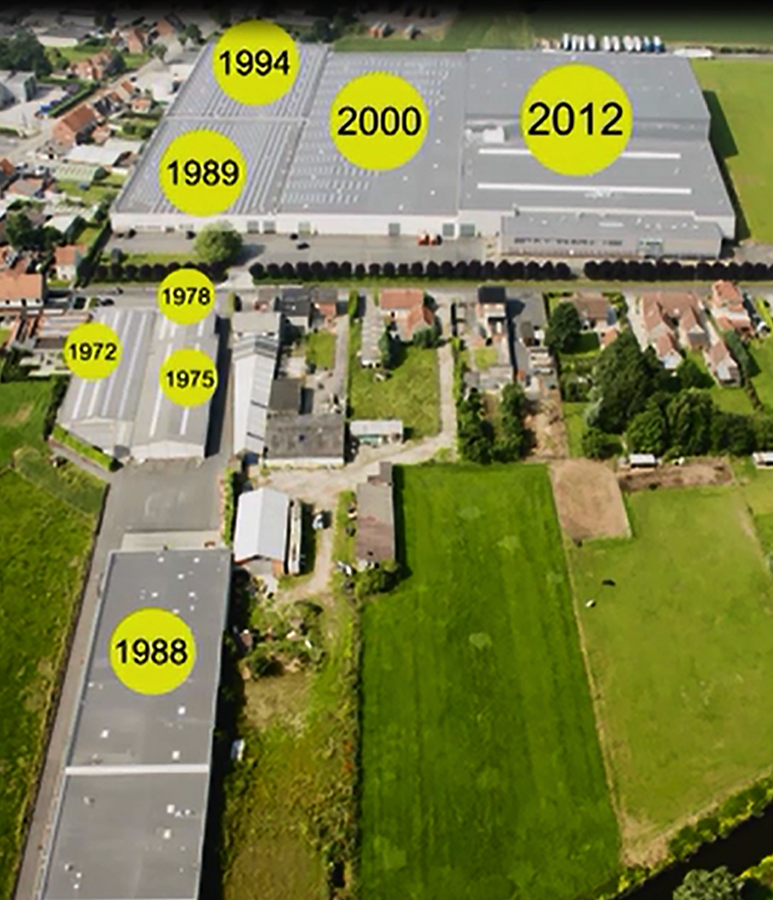
1963: On 10 October 1963, Mr and Mrs Marnix Lefevere-Beel started a ‘box factory’(cardboard boxes), which they had taken over from Mr Verbrugge from Roeselare. Barely one year later, they purchased new company premises at Drie Koningenstraat 6, where they are still located. In the same year, they replaced just about all their machinery.
1973: Ten years later, they had acquired a considerable client database and demand for corrugated cardboard packaging was still growing. And so, they ventured to start a corrugated cardboard packaging department. Corrugated cardboard became their speciality. This enable them to offer their clients a comprehensive service.
To continue to meet client demand and absorb it rationally, they decided to build a completely new factory on the other side of Driekoningenstraat to house the production lines. The former buildings now serve as warehouses. They have regularly extended the new building in line with the ongoing growth of the company.
The current surface area is over 55,000m².
Machinery and storage
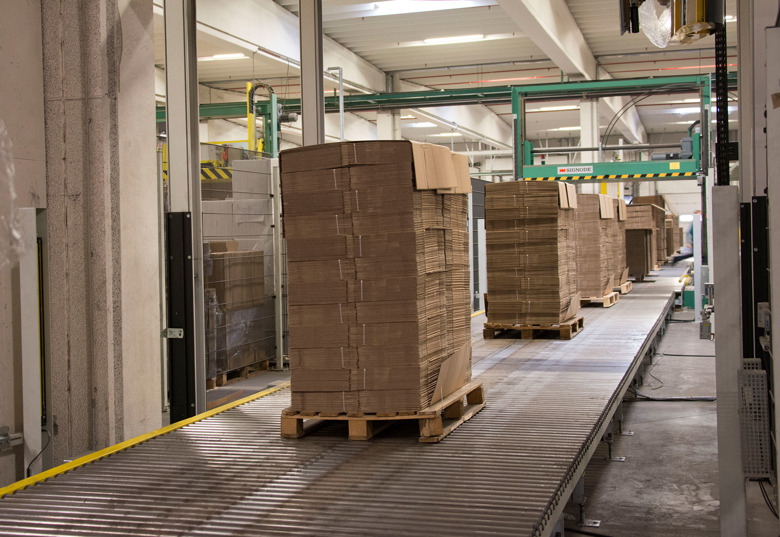
With modern machinery, punch machines, various finish machines, line machines, and a permanent stock of 60 grades of corrugated cardboard, we can work flexibly in line with client wishes and deliver just in time.
Depending on the complexity of the packaging, we choose to work with flat or rotating cutters, sometimes via a line machine, in which a sheet of cardboard is inserted and converted in one movement into a finished box. Printed, stapled, glued, or taped, it’s all possible.
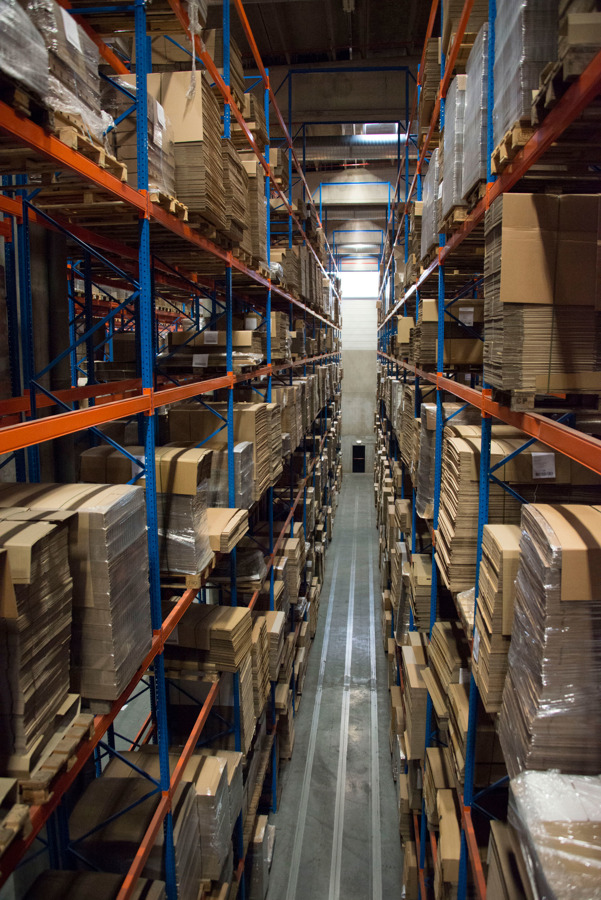
To ensure a smooth operation at all times, we constantly inspect the parameters and use the latest techniques. Thanks to the optimisation of the internal logistics and the automatically driven fork-lift trucks, we follow the pallet movements step by step in the production process in order to take them via the shortest possible route to the high-bay warehouse (13,000 pallet spaces) or directly to the loading zone.
Since we offer our clients just-in-time deliveries, our transport infrastructure is based on the stop-and-go principle, whereby the trailers are loaded ready so that the lorry driver can collect them and get back on the road at once.